The museum's exhibition at United Nations Headquarters New York is part of the events of The Holocaust and the United Nations Outreach Programme in memory of the victims and survivors of the November pogrom (9-10 November 1938).
October 23 to November 17, 2023
at the United Nations Headquarters in New York
Gallery B in the public area of the foyer, 46th St & 1st Ave, New York
Opening event on November 8, 2023 to commemorate the pogrom night in 1938
The exhibition highlights the current significance of art for the memory of the Holocaust. It provides three generations by artists: teachers and students who experienced the Holocaust and another generation who also reacted to it in their art. Arranged chronologically into seven sections, the exhibition revolves around Artist and eyewitness Yehuda Bacon, who was freed from the camps at the age of 15.
Since the attack on Israel by the terrorist organization Hamas on October 7, 2023, in which over 1,400 Israeli civilians were cruelly murdered and more than 200 hostages were abducted to the Gaza Strip, including survivors of the Holocaust, the exhibition has become terribly topical. Our solidarity goes out to the people of Israel, in particular our partners in Yad Vashem, the artists and their families, with whom we have established close contacts in recent years. Analogies to the National Socialist era are prohibited if you want to do justice to the complexity of the situation in the Middle East. But what we can show is how artists dealt with what they had experienced back then and how they were able to reconnect with each other through art, to perceive and recognize the suffering of the victims and to take joint responsibility for the future. The museum Center for Persecuted Arts With this exhibition, together with its partners from Poland, Israel and the USA, wants to take responsibility for remembering the past and make it visible to all people at this special place in New York.
“What does that mean, hope? I knew full well that, just like everyone else, I would of course die in the end. But still I asked the people from the crematorium: Please tell me your story, please explain to me what it is. And they said: What do you want to know, no one will survive here, that's obvious. And I knew they could burn my body, but in all of us there is a part that existed before we were born and will never die. ”
— Yehuda Bacon in a gallery talk in Yad Vashem, 2016
The exhibition starts with Felix Nussbaum (1904—1944), who reacted in a picture to the November pogroms of 1938 and foresaw the destruction of European Jewry. It was only in 2022 that a art technology investigation Cologne University CICS discovered this connection.
The next section brings together works of art from the Theresienstadt ghetto. This includes drawings of Karel Fleischmann (1897—1944), who gave Yehuda Bacon the first drawing lessons in the ghetto, and from the painter, poet and art teacher Peter Kien (1919—1944), whom Yehuda Bacon knew.
The survivors of the Holocaust testified immediately after 1945. This is what works of art by Jonasz Stern (1904—1988) and Boris Lurie (1924—2008), who, like Bacon, were the only survivors of their families and remembered their loved ones and their murdered community. Two originals by artist Jonasz Stern represent the MOCAK Museum of Contemporary Art Krakow available, whose work 2017 in Center for Persecuted Arts was honored with a solo exhibition in Solingen.
The main part is the art of Yehuda Bacon (born 1929 in Moravska Ostrava), from the drawings created immediately after his liberation, in which he recorded his experiences in Auschwitz, to the self-portraits he took as a student at Bezalel Academy of Art and Design During the first years of the founding of the State of Israel, including drawings in which he had developed his own expressive and symbolic language. In addition to his artistic career, Bacon kept his oath to his family and friends to testify before the world about the crimes of the Holocaust, and appeared as a witness in the Eichmann trial in Jerusalem in 1961 and in the Auschwitz trial in Frankfurt in 1964, where his early drawings of Auschwitz-Birkenau and the crematoria were used as visual evidence. In parallel, Bacon taught art in Jerusalem for 35 years.
One of his students was Sigalit Landau (born 1969 in Jerusalem). The exhibition ends with this internationally recognized Israeli artist, daughter of a Holocaust survivor, who relates to the Holocaust in a personal yet universal approach. Ultimately, the artistic thread that connects teachers with their students reflects the transmission of the memory of the victims and survivors of the Holocaust to subsequent generations. The works of art show the emotional power of visual testimony for the commemoration of the Holocaust and our responsibility to keep it up to date.

The visit
All visitors to United Nations Headquarters must report to the UN Security Service before they enter the United Nations building. At check-in, visitors must present a valid photo ID (passport, driver's license, or identity card) issued by a member state or a non-member observer state of the United Nations in order to obtain a security pass. It is possible to visit the exhibition without taking part in a guided tour and without prior registration.
Opening hours
Monday to Friday 9:00 — 17:00
address
46th St & 1st Ave, New York, NY 10017
imprint
“Responsibility for Memory”: One Museum exhibition Center for Persecuted Arts, Solingen with Yad Vashem, Jerusalem in cooperation with MOCAK Museum of Contemporary Art Krakow and the Boris Lurie Art Foundation, New York. It is part of the commemoration of The Holocaust and The United Nations Outreach Programme to the November pogrom (November 9—10, 1938).
Artists: Felix Nussbaum, Ludwig Meidner, Karel Fleischmann, Peter Kien, Jonasz Stern, Boris Lurie, Yehuda Bacon, Sigalit Landau; originals, facsimiles and reproductions as well as photos from the collection of the Civic Foundation for Persecuted Arts — Else Lasker-Schüler Center — Gerhard Schneider Art Collection
Curators: Eliad Moreh-Rosenberg (Yad Vashem), Dr. Jürgen Joseph Kaumkötter (Center for Persecuted Arts)
Design: Good in the wrong — Office for Political Communication
Interview with Yehuda Bacon, authors: Julia Riedhammer, Christine Thalmann, RBB/ARD, Rundfunk Berlin Brandenburg: auschwitzundich.ard.de
With friendly support from the Foreign Office of the Federal Republic of Germany and the Permanent Mission of Germany to the United Nations.
Online exhibition: un.org/en/exhibits/exhibit/responsibility-for-memory
What’s a Rich Text element?
The rich text element allows you to create and format headings, paragraphs, blockquotes, images, and video all in one place instead of having to add and format them individually. Just double-click and easily create content.
Static and dynamic content editing
A rich text element can be used with static or dynamic content. For static content, just drop it into any page and begin editing. For dynamic content, add a rich text field to any collection and then connect a rich text element to that field in the settings panel. Voila!
How to customize formatting for each rich text
Headings, paragraphs, blockquotes, figures, images, and figure captions can all be styled after a class is added to the rich text element using the "When inside of" nested selector system.
What’s a Rich Text element?
The rich text element allows you to create and format headings, paragraphs, blockquotes, images, and video all in one place instead of having to add and format them individually. Just double-click and easily create content.
Static and dynamic content editing
A rich text element can be used with static or dynamic content. For static content, just drop it into any page and begin editing. For dynamic content, add a rich text field to any collection and then connect a rich text element to that field in the settings panel. Voila!
How to customize formatting for each rich text
Headings, paragraphs, blockquotes, figures, images, and figure captions can all be styled after a class is added to the rich text element using the "When inside of" nested selector system.
What’s a Rich Text element?
The rich text element allows you to create and format headings, paragraphs, blockquotes, images, and video all in one place instead of having to add and format them individually. Just double-click and easily create content.
Static and dynamic content editing
A rich text element can be used with static or dynamic content. For static content, just drop it into any page and begin editing. For dynamic content, add a rich text field to any collection and then connect a rich text element to that field in the settings panel. Voila!
How to customize formatting for each rich text
Headings, paragraphs, blockquotes, figures, images, and figure captions can all be styled after a class is added to the rich text element using the "When inside of" nested selector system.
What’s a Rich Text element?
The rich text element allows you to create and format headings, paragraphs, blockquotes, images, and video all in one place instead of having to add and format them individually. Just double-click and easily create content.
Static and dynamic content editing
A rich text element can be used with static or dynamic content. For static content, just drop it into any page and begin editing. For dynamic content, add a rich text field to any collection and then connect a rich text element to that field in the settings panel. Voila!
How to customize formatting for each rich text
Headings, paragraphs, blockquotes, figures, images, and figure captions can all be styled after a class is added to the rich text element using the "When inside of" nested selector system.
What’s a Rich Text element?
The rich text element allows you to create and format headings, paragraphs, blockquotes, images, and video all in one place instead of having to add and format them individually. Just double-click and easily create content.
Static and dynamic content editing
A rich text element can be used with static or dynamic content. For static content, just drop it into any page and begin editing. For dynamic content, add a rich text field to any collection and then connect a rich text element to that field in the settings panel. Voila!
How to customize formatting for each rich text
Headings, paragraphs, blockquotes, figures, images, and figure captions can all be styled after a class is added to the rich text element using the "When inside of" nested selector system.
What’s a Rich Text element?
The rich text element allows you to create and format headings, paragraphs, blockquotes, images, and video all in one place instead of having to add and format them individually. Just double-click and easily create content.
Static and dynamic content editing
A rich text element can be used with static or dynamic content. For static content, just drop it into any page and begin editing. For dynamic content, add a rich text field to any collection and then connect a rich text element to that field in the settings panel. Voila!
How to customize formatting for each rich text
Headings, paragraphs, blockquotes, figures, images, and figure captions can all be styled after a class is added to the rich text element using the "When inside of" nested selector system.
What’s a Rich Text element?
The rich text element allows you to create and format headings, paragraphs, blockquotes, images, and video all in one place instead of having to add and format them individually. Just double-click and easily create content.
Static and dynamic content editing
A rich text element can be used with static or dynamic content. For static content, just drop it into any page and begin editing. For dynamic content, add a rich text field to any collection and then connect a rich text element to that field in the settings panel. Voila!
How to customize formatting for each rich text
Headings, paragraphs, blockquotes, figures, images, and figure captions can all be styled after a class is added to the rich text element using the "When inside of" nested selector system.
What’s a Rich Text element?
The rich text element allows you to create and format headings, paragraphs, blockquotes, images, and video all in one place instead of having to add and format them individually. Just double-click and easily create content.
Static and dynamic content editing
A rich text element can be used with static or dynamic content. For static content, just drop it into any page and begin editing. For dynamic content, add a rich text field to any collection and then connect a rich text element to that field in the settings panel. Voila!
How to customize formatting for each rich text
Headings, paragraphs, blockquotes, figures, images, and figure captions can all be styled after a class is added to the rich text element using the "When inside of" nested selector system.
What’s a Rich Text element?
The rich text element allows you to create and format headings, paragraphs, blockquotes, images, and video all in one place instead of having to add and format them individually. Just double-click and easily create content.
Static and dynamic content editing
A rich text element can be used with static or dynamic content. For static content, just drop it into any page and begin editing. For dynamic content, add a rich text field to any collection and then connect a rich text element to that field in the settings panel. Voila!
How to customize formatting for each rich text
Headings, paragraphs, blockquotes, figures, images, and figure captions can all be styled after a class is added to the rich text element using the "When inside of" nested selector system.
What’s a Rich Text element?
The rich text element allows you to create and format headings, paragraphs, blockquotes, images, and video all in one place instead of having to add and format them individually. Just double-click and easily create content.
Static and dynamic content editing
A rich text element can be used with static or dynamic content. For static content, just drop it into any page and begin editing. For dynamic content, add a rich text field to any collection and then connect a rich text element to that field in the settings panel. Voila!
How to customize formatting for each rich text
Headings, paragraphs, blockquotes, figures, images, and figure captions can all be styled after a class is added to the rich text element using the "When inside of" nested selector system.
What’s a Rich Text element?
The rich text element allows you to create and format headings, paragraphs, blockquotes, images, and video all in one place instead of having to add and format them individually. Just double-click and easily create content.
Static and dynamic content editing
A rich text element can be used with static or dynamic content. For static content, just drop it into any page and begin editing. For dynamic content, add a rich text field to any collection and then connect a rich text element to that field in the settings panel. Voila!
How to customize formatting for each rich text
Headings, paragraphs, blockquotes, figures, images, and figure captions can all be styled after a class is added to the rich text element using the "When inside of" nested selector system.
What’s a Rich Text element?
The rich text element allows you to create and format headings, paragraphs, blockquotes, images, and video all in one place instead of having to add and format them individually. Just double-click and easily create content.
Static and dynamic content editing
A rich text element can be used with static or dynamic content. For static content, just drop it into any page and begin editing. For dynamic content, add a rich text field to any collection and then connect a rich text element to that field in the settings panel. Voila!
How to customize formatting for each rich text
Headings, paragraphs, blockquotes, figures, images, and figure captions can all be styled after a class is added to the rich text element using the "When inside of" nested selector system.


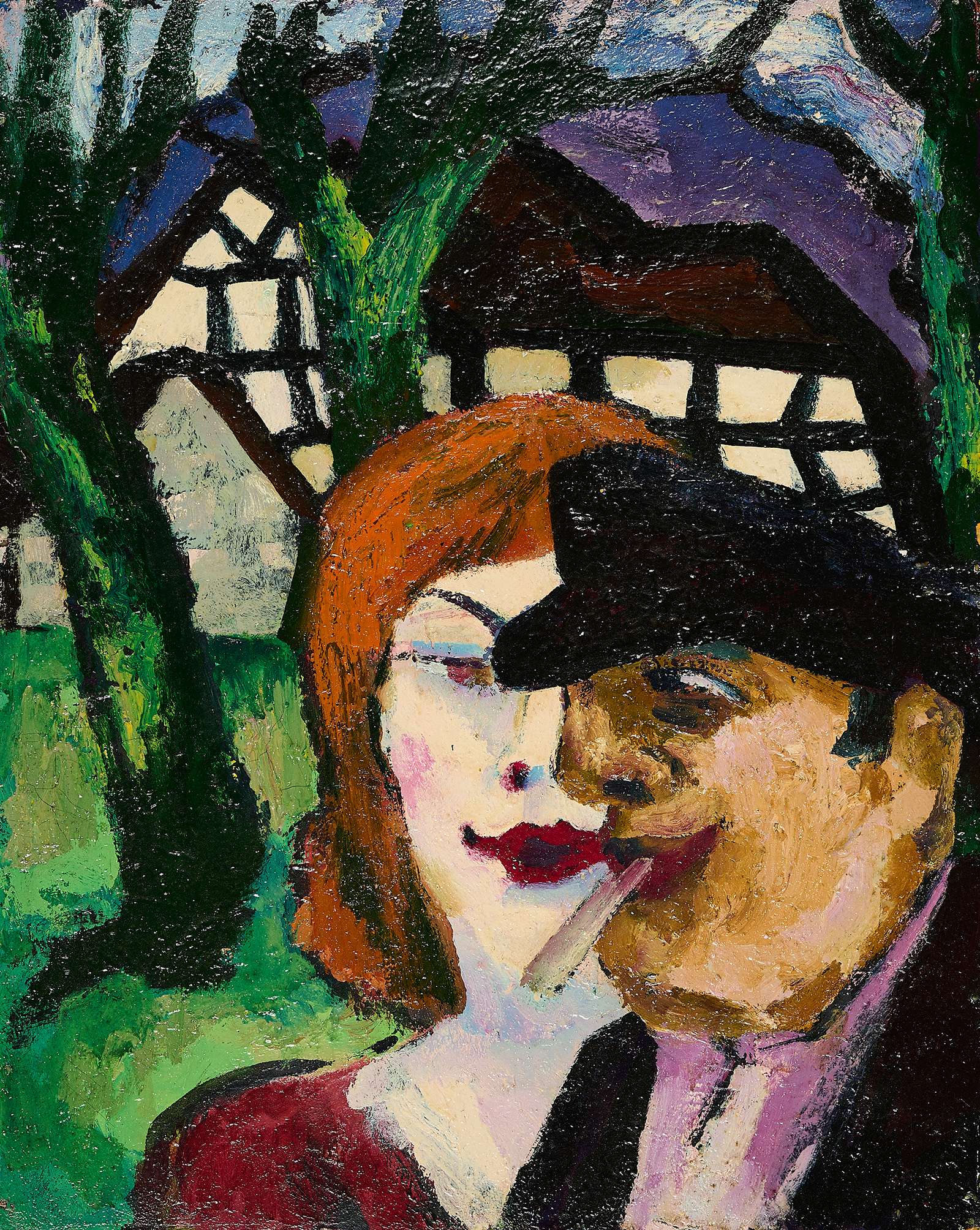
Wechselausstellung
:
Lines of Destiny
The painter Fritz Schaefler and his collector Joseph Heymann
The exhibition explores the fractured biographies of two men: the Expressionist painter and graphic artist Fritz Schaefler (1888-1954) and the Rheinland Jewish industrialist and art collector Joseph Heymann (1887-1954).


Führung
:
Öffentliche Sonntagsführung in der Dauerausstellung
Eine Entdeckungsreise durch unsere Sammlung
Im Zentrum für verfolgte Künste können Sie Künstler:innen entdecken, die über die letzten Jahrzehnte in Vergessenheit geraten sind.
colloquy
:
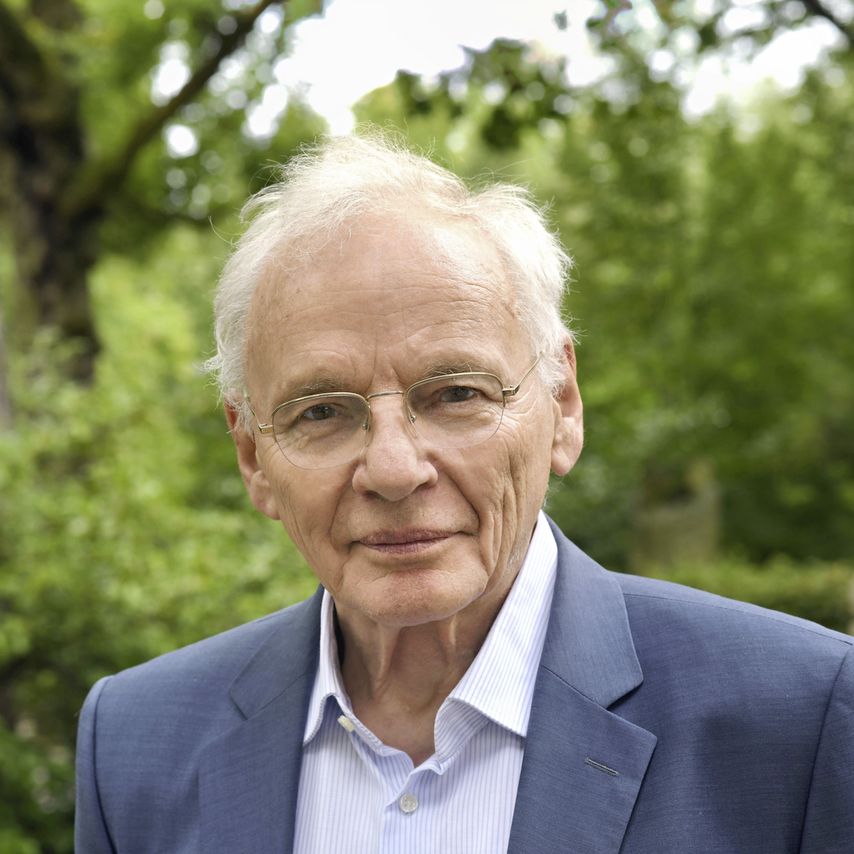
How could that happen?
Cultural Policy Salon with Götz Aly
Götz Aly is one of the most famous authors on the history of National Socialism and the Holocaust. Cultural Policy Salon at the Center for Persecuted Arts with Andreas Schäfer.



.jpg)