With the exhibition LIFE WITH THE DEAD, the Boris Lurie Art Foundation in collaboration with the museum Center for Persecuted Arts On the 100th birthday of Boris Lurie, his artistic work to the public, which could hardly be more topical in the present time with growing anti-Semitism, racism and right-wing populism worldwide.
The exhibition can be seen from April 20 to November 24, 2024 on the occasion of the 60th Venice Biennale.
Scuola Grande San Giovanni Evangelista, Spazio Espositivo Badoer
San Polo, 30125 Venezia, Italia
Google Maps Plus Code: Venice C8QG+9C
Tuesday—Sunday, 10:00 a.m. — 6:00 p.m.

Video greeting from Minister Ina Brandes at the opening on April 17, 2024
The catalog
The exhibition is accompanied by a catalogue (English, Italian, German) by Hatje Cantz Verlag with contributions from René Block, Achille Bonito Oliva, Tom Wolfe, among others.

Voices from the catalog:
“'We want to create art, not destroy it, but say clearly what we mean — and at the expense of good manners, 'wrote Lurie in 1961 at the opening of an exhibition at the New York March Gallery. Why can we descendants hope that Boris Lurie's art is more than just a historical index finger at the most terrible crime in human history? Probably also because we have to! ” — Professor Dr. Jürgen Wilhelm
“With his art, Boris Lurie shows us the constant threat posed by the dark side of human existence. With this reminder, Lurie wanted to raise our awareness, question the prevailing order, criticize and stand up for a more just and solidary society. ” — Saul Ostrov
“His art is radical, often difficult to bear, because its content is an expression of terrible experiences of the Holocaust, to which Boris Lurie was exposed especially in his youth — so indescribably cruel that you can barely express it in words, but you have to. These experiences shaped Boris Lurie as a person and were reflected in his artistic work. In the post-war period, renowned museums in the USA excluded him. Curators and gallerists did not want to know anything about his art. She was too harsh or perhaps too honest for them. ” — Rafael Vostell

The exhibition
Boris Lurie. Life with the Dead presents more than fifty works from 1950 to 1970, which illustrate his active commitment to social justice and the memory of the Holocaust. Boris Lurie was born in Leningrad in 1924 in a Jewish family and grew up in Riga. He lost his mother, grandmother, sister and childhood sweetheart in the Rumbula Forest (Riga) in a mass shooting by the Nazis on December 8, 1941. These dead accompanied him every moment of his life. Boris Lurie survived the terror of the German concentration camps and emigrated to New York in 1946.
Boris Lurie was co-founder of NO! art, a provocative art movement of the 1960s. His collages and sculptures are an expression of his rejection of the art market and pop art. They oppose the consumer society and the Americanization of the world. The works are characterized by subversion, irony and strong political statements. In contrast to consumer-oriented American society, Boris Lurie saw as a foreigner the humanitarian abysses of his new reality of life.
Visitors will see works that deal with racism, war, oppression and injustice. Lurie's art is a powerful voice that denounces social grievances and calls for action.
Center for Persecuted Arts — “Boris Lurie. Life with the Dead”, Venice 2024
Place of exhibition
Die Scuola Grande is a historic building complex from the 14th century in San Polo, in the heart of Venice. It originally served as a religious brotherhood dedicated to caring for the poor and sick. Today, the complex is used for events and exhibitions and is an example of Venice's architectural splendor in the Middle Ages and the Renaissance. Particularly remarkable are the impressive Renaissance façade and the beautiful courtyard, which provides access to the exhibition rooms. The exhibitions are held at Spazio Badoer and are presented on a partition system specially developed by Venetian architect Michael Klopfer and with newly built-in lighting. The architecture of the exhibition has received approval from the Soprintendenza (Venetian Heritage Preservation).
The exhibition room Spazio Badoer The ground floor next to the church of San Giovanni Evangelista has direct access from Campo San Giovanni Evangelista. It is the result of centuries of architectural changes and offers an impressive environment with exposed bricks and a wooden attic. The original structure of round stone columns, square brick columns and a wooden ceiling was reinforced by a metal structure of round pillars and black-painted beams. The original floor covering, consisting of several ground-level stone graves, was integrated into the renovated floor. On the walls are an altar, a wall stone grave and three stone graves as well as a stone table.
visual identity
The visual identity of the exhibition reflects various techniques and content by Boris Lurie, such as distinctive typesetting, criticism of pop art, the shock effect, the collage technique, or the contrasting of the atrocities of the Holocaust with the cultural-industrial exploitation of people. Visual communication never competes with the works of Boris Lurie. Instead, she transfers the inner dynamics of his work to posters, catalogues and outdoor advertising by taking a step back within the exhibition itself in order to give the works of art as much space as possible.
The visual identity is created by Good in the wrong - Office for Political Communication developed.
National press contacts are responsible for communication Kathrin Luz and in the museum Center for Persecuted Arts as a contact person Daniela Tobias.
Press review
- Kunstforum.de, 22.03.2024: Venice: Boris Lurie exhibition during 60th Biennale
- news.artnet.com, 19.4.2024: There Are a Ton of Shows to See Around the Venice Biennale—Here's Our Take on What's Worth Seeing (and What's Not) (Jo Lawson-Tancred)
- taz.de, 19.4.2024: Venice Biennale Tour - Celebrate the Mingling (Sophia Jung)
- WDR local time in Bergisches Land, 19.04.2024: Solingen Center for Persecuted Arts at the Venice Biennale
- Monopol magazine, 24.4.2024: Boris Lurie in Venice — exhausting, disturbing, great art (Bernhard Schulz)
- Tachles, The Jewish Weekly Magazine, 26.4.2024: Large-scale exhibition on Boris Lurie in Venice (Andreas Mink)
- Solinger Tageblatt, 29.4.2024: In Venice, gunmen watch out for Jewish art (Philipp Müller)
- Haaretz, 6.5.2024: Boris Lurie survived the Holocaust. His art remained in a concentration camp (Naama Riva)
- Mentioned in New York Social Diary, May 21, 2024: Refuge in Venice at Biennale Arte 2024, the 60th International Art Exhibition, Part I (Barbara Hodes)
- Tagesspiegel, 30.6.2024: Summer at the lagoon: Ten exciting tips for the Venice Art Biennale (Nicola Kuhn)
- Il Bo Live, University of Padova, 14.7.2024: Venezia, i “Fuori” Biennale (Julia Granzotto)
- Solinger Tageblatt, 16.7.2024: 50,000 visitors have wanted to see the Solingen show in Venice so far (Philipp Müller)
- Kunstforum International, Vol. 297 Textile Revivals: Boris Lurie — Life with the Dead. On the 100th birthday of the artist (Uta M. Reindl)
- Wiesbadener Kurier, 19.8.2024: The art of the naysayer (Doro Bär-Bogenschütz)
What’s a Rich Text element?
The rich text element allows you to create and format headings, paragraphs, blockquotes, images, and video all in one place instead of having to add and format them individually. Just double-click and easily create content.
Static and dynamic content editing
A rich text element can be used with static or dynamic content. For static content, just drop it into any page and begin editing. For dynamic content, add a rich text field to any collection and then connect a rich text element to that field in the settings panel. Voila!
How to customize formatting for each rich text
Headings, paragraphs, blockquotes, figures, images, and figure captions can all be styled after a class is added to the rich text element using the "When inside of" nested selector system.
What’s a Rich Text element?
The rich text element allows you to create and format headings, paragraphs, blockquotes, images, and video all in one place instead of having to add and format them individually. Just double-click and easily create content.
Static and dynamic content editing
A rich text element can be used with static or dynamic content. For static content, just drop it into any page and begin editing. For dynamic content, add a rich text field to any collection and then connect a rich text element to that field in the settings panel. Voila!
How to customize formatting for each rich text
Headings, paragraphs, blockquotes, figures, images, and figure captions can all be styled after a class is added to the rich text element using the "When inside of" nested selector system.
What’s a Rich Text element?
The rich text element allows you to create and format headings, paragraphs, blockquotes, images, and video all in one place instead of having to add and format them individually. Just double-click and easily create content.
Static and dynamic content editing
A rich text element can be used with static or dynamic content. For static content, just drop it into any page and begin editing. For dynamic content, add a rich text field to any collection and then connect a rich text element to that field in the settings panel. Voila!
How to customize formatting for each rich text
Headings, paragraphs, blockquotes, figures, images, and figure captions can all be styled after a class is added to the rich text element using the "When inside of" nested selector system.
What’s a Rich Text element?
The rich text element allows you to create and format headings, paragraphs, blockquotes, images, and video all in one place instead of having to add and format them individually. Just double-click and easily create content.
Static and dynamic content editing
A rich text element can be used with static or dynamic content. For static content, just drop it into any page and begin editing. For dynamic content, add a rich text field to any collection and then connect a rich text element to that field in the settings panel. Voila!
How to customize formatting for each rich text
Headings, paragraphs, blockquotes, figures, images, and figure captions can all be styled after a class is added to the rich text element using the "When inside of" nested selector system.
What’s a Rich Text element?
The rich text element allows you to create and format headings, paragraphs, blockquotes, images, and video all in one place instead of having to add and format them individually. Just double-click and easily create content.
Static and dynamic content editing
A rich text element can be used with static or dynamic content. For static content, just drop it into any page and begin editing. For dynamic content, add a rich text field to any collection and then connect a rich text element to that field in the settings panel. Voila!
How to customize formatting for each rich text
Headings, paragraphs, blockquotes, figures, images, and figure captions can all be styled after a class is added to the rich text element using the "When inside of" nested selector system.
What’s a Rich Text element?
The rich text element allows you to create and format headings, paragraphs, blockquotes, images, and video all in one place instead of having to add and format them individually. Just double-click and easily create content.
Static and dynamic content editing
A rich text element can be used with static or dynamic content. For static content, just drop it into any page and begin editing. For dynamic content, add a rich text field to any collection and then connect a rich text element to that field in the settings panel. Voila!
How to customize formatting for each rich text
Headings, paragraphs, blockquotes, figures, images, and figure captions can all be styled after a class is added to the rich text element using the "When inside of" nested selector system.
What’s a Rich Text element?
The rich text element allows you to create and format headings, paragraphs, blockquotes, images, and video all in one place instead of having to add and format them individually. Just double-click and easily create content.
Static and dynamic content editing
A rich text element can be used with static or dynamic content. For static content, just drop it into any page and begin editing. For dynamic content, add a rich text field to any collection and then connect a rich text element to that field in the settings panel. Voila!
How to customize formatting for each rich text
Headings, paragraphs, blockquotes, figures, images, and figure captions can all be styled after a class is added to the rich text element using the "When inside of" nested selector system.
What’s a Rich Text element?
The rich text element allows you to create and format headings, paragraphs, blockquotes, images, and video all in one place instead of having to add and format them individually. Just double-click and easily create content.
Static and dynamic content editing
A rich text element can be used with static or dynamic content. For static content, just drop it into any page and begin editing. For dynamic content, add a rich text field to any collection and then connect a rich text element to that field in the settings panel. Voila!
How to customize formatting for each rich text
Headings, paragraphs, blockquotes, figures, images, and figure captions can all be styled after a class is added to the rich text element using the "When inside of" nested selector system.
What’s a Rich Text element?
The rich text element allows you to create and format headings, paragraphs, blockquotes, images, and video all in one place instead of having to add and format them individually. Just double-click and easily create content.
Static and dynamic content editing
A rich text element can be used with static or dynamic content. For static content, just drop it into any page and begin editing. For dynamic content, add a rich text field to any collection and then connect a rich text element to that field in the settings panel. Voila!
How to customize formatting for each rich text
Headings, paragraphs, blockquotes, figures, images, and figure captions can all be styled after a class is added to the rich text element using the "When inside of" nested selector system.
What’s a Rich Text element?
The rich text element allows you to create and format headings, paragraphs, blockquotes, images, and video all in one place instead of having to add and format them individually. Just double-click and easily create content.
Static and dynamic content editing
A rich text element can be used with static or dynamic content. For static content, just drop it into any page and begin editing. For dynamic content, add a rich text field to any collection and then connect a rich text element to that field in the settings panel. Voila!
How to customize formatting for each rich text
Headings, paragraphs, blockquotes, figures, images, and figure captions can all be styled after a class is added to the rich text element using the "When inside of" nested selector system.
What’s a Rich Text element?
The rich text element allows you to create and format headings, paragraphs, blockquotes, images, and video all in one place instead of having to add and format them individually. Just double-click and easily create content.
Static and dynamic content editing
A rich text element can be used with static or dynamic content. For static content, just drop it into any page and begin editing. For dynamic content, add a rich text field to any collection and then connect a rich text element to that field in the settings panel. Voila!
How to customize formatting for each rich text
Headings, paragraphs, blockquotes, figures, images, and figure captions can all be styled after a class is added to the rich text element using the "When inside of" nested selector system.
What’s a Rich Text element?
The rich text element allows you to create and format headings, paragraphs, blockquotes, images, and video all in one place instead of having to add and format them individually. Just double-click and easily create content.
Static and dynamic content editing
A rich text element can be used with static or dynamic content. For static content, just drop it into any page and begin editing. For dynamic content, add a rich text field to any collection and then connect a rich text element to that field in the settings panel. Voila!
How to customize formatting for each rich text
Headings, paragraphs, blockquotes, figures, images, and figure captions can all be styled after a class is added to the rich text element using the "When inside of" nested selector system.


Pressespiegel
Wechselausstellung
:
Lines of Destiny
The painter Fritz Schaefler and his collector Joseph Heymann
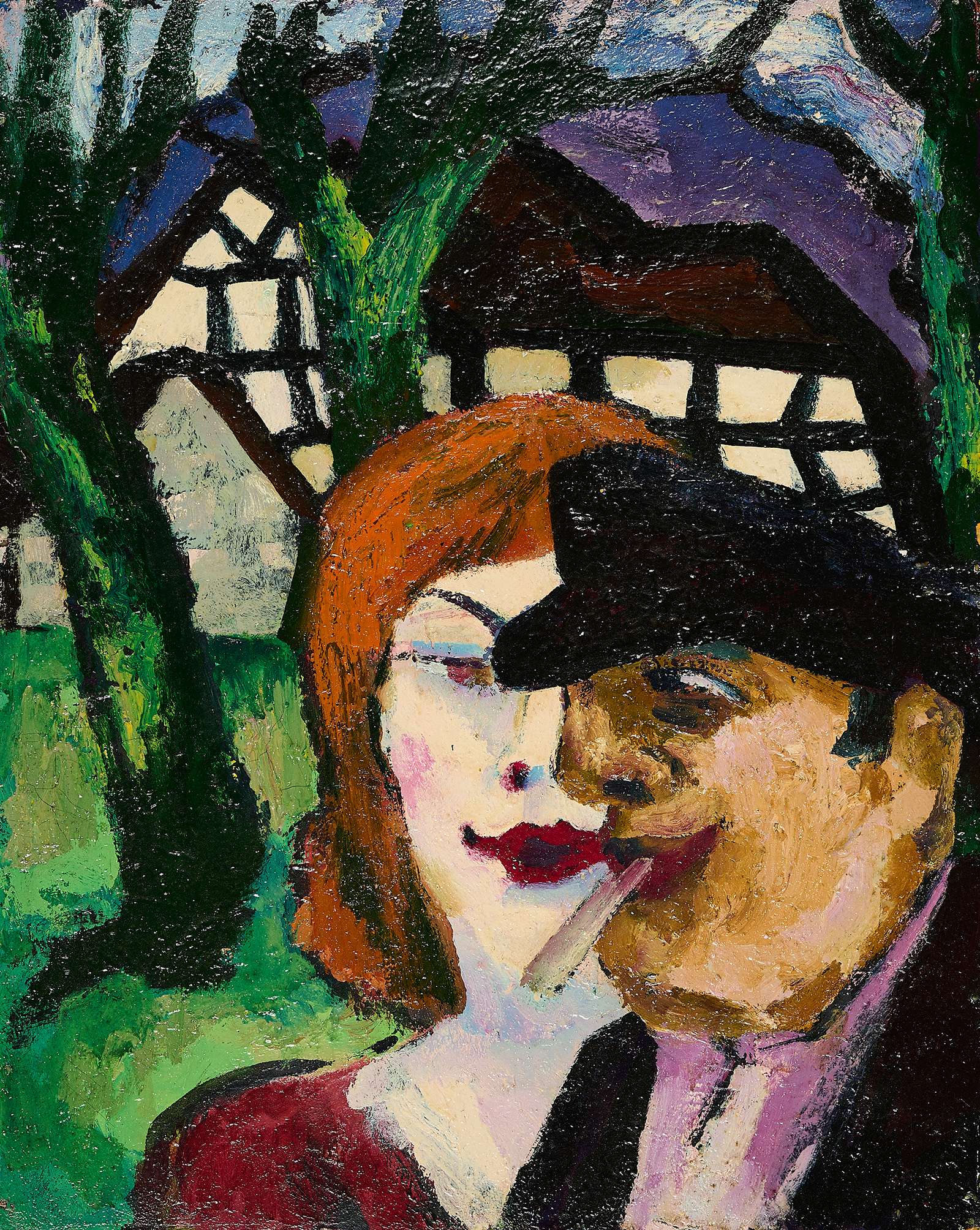
The exhibition explores the fractured biographies of two men: the Expressionist painter and graphic artist Fritz Schaefler (1888-1954) and the Rheinland Jewish industrialist and art collector Joseph Heymann (1887-1954).


Führung
:
Öffentliche Sonntagsführung in der Dauerausstellung
Eine Entdeckungsreise durch unsere Sammlung
Im Zentrum für verfolgte Künste können Sie Künstler:innen entdecken, die über die letzten Jahrzehnte in Vergessenheit geraten sind.
colloquy
:
How could that happen?
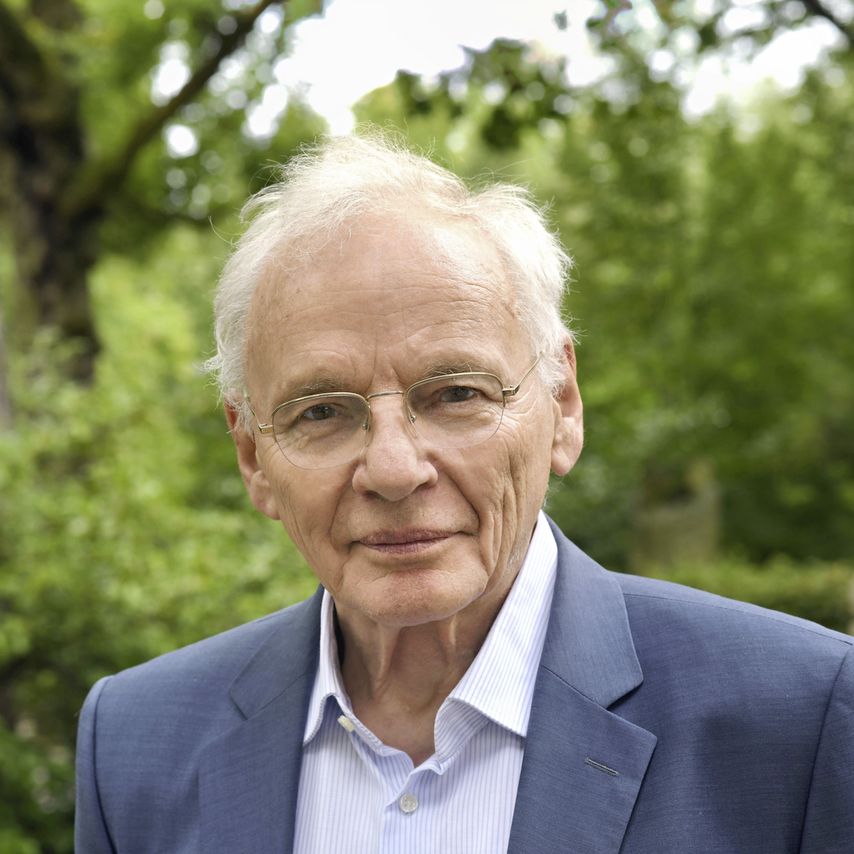
Cultural Policy Salon with Götz Aly
Götz Aly is one of the most famous authors on the history of National Socialism and the Holocaust. Cultural Policy Salon at the Center for Persecuted Arts with Andreas Schäfer.



.jpg)