In order to be able to display video content from Vimeo, we use cookies on this site. Vimeo may collect personal data for analytical purposes. By clicking “Accept”, you agree to this data processing. Further information and the option to withdraw your consent can be found in our Privacy statement.

Karoline Wittmann in the exhibition “Memory is...”

22.7.2025

Blog
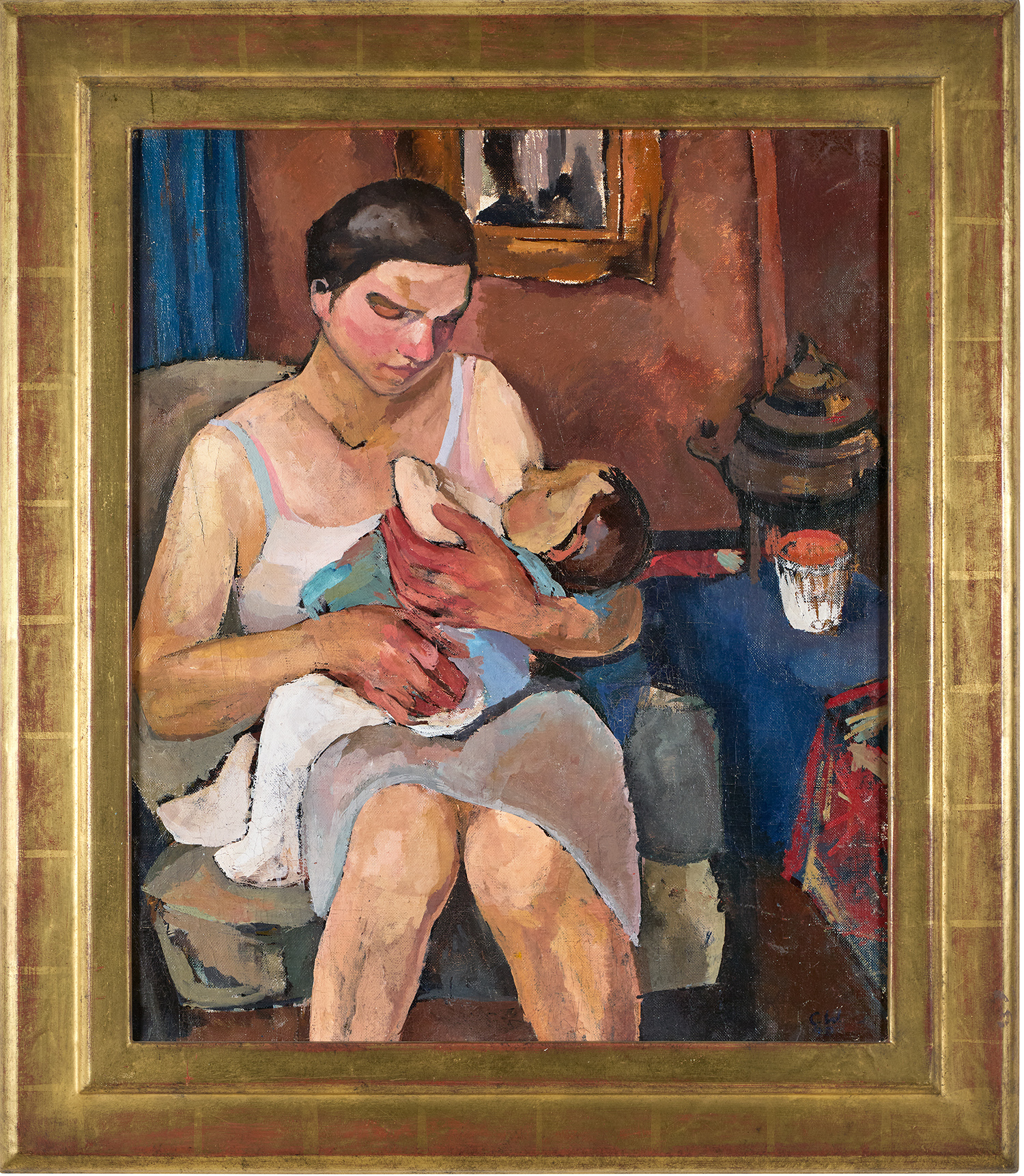
Karoline Wittmann, mother and child (Maria and Georg Pöltl), 1940, photo: Connolly Weber Photography © Citizens' Foundation for Persecuted Arts — Else Lasker-Schüler-Zentrum — Gerhard Schneider Art Collection
22.7.25
The story of Schorschi from the picture “Mother and Child”

The picture “Mother and Child (Maria and Georg Pöltl)” of Karoline Wittmann from the possession of Civic Foundation for Persecuted Arts — Else Lasker-Schüler-Zentrum — Gerhard Schneider Art Collection is currently on loan at the exhibition Memory is... ofthe nsdoku Munich to see. The painting shows the painter's sister, Maria Pöltl, with her son Georg. The boy, born in 1928, was arrested in February 1945 for breaking into bombed houses. He was detained in the Dachau concentration camp, where he died a few weeks later. His fate points to the multitude of “forgotten victims” of National Socialism — people who were persecuted and murdered as “antisocial” or “damaging to the people.”

On the occasion of the tenth anniversary of the NS Documentation Center Munich, Memory is... to think together about how difficult and painful experiences can be presented, conveyed and interpreted. A hat, a wooden box, a pill tube, a beer mug. What memories do these things have, what stories can they tell? What do we want to hear from them?

Selected objects complement the exhibition for one year Munich and National Socialism and share them through new stories. Large and small, everyday and unusual things create sensual approaches and provide a different view of the past. Personal audio commentaries accompany the individual objects, classify them and make larger connections tangible. Her son Paul Maria Wittmann talks about the painting by Karoline Wittmann:

The painting shows the painter's sister, Maria Pöltl, and her son Georg as an infant. It was painted from a sketch from the late 1920s. When the picture was taken, no one had any idea that “Schorschi” would be dead a few years later: He died in 1945 at the age of 16 in Dachau concentration camp.

Georg had been a resistant spirit. The father had died in Ukraine in 1943, and the mother was obliged to work in the writing office of police headquarters. In the midst of the war, he lacked real contacts during the so important “teenage years.” He evaded parenting attempts by his grandparents, who ran a stationery store, and was usually left to their own devices. He appears to have been recalcitrant towards Nazi ideology. He was not a member of the Hitler Youth, and it is said that he wore a Star of David covertly on his undershirt out of solidarity.

At the beginning of 1945, he and a friend entered a bombed-out villa in Bogenhausen. They both got drunk in the wine cellar there, were picked up by the police on February 3, 1945 and imprisoned in the so-called “alternative rest” of the Dachau concentration camp due to lack of space in Munich prisons. The mother brought food packages to the typhoid concentration camp, which was completely overcrowded with starving people, which Schorschi probably never received. During their last visit on April 10, 1945, the SS told her mother and her sister Karoline that Schorschi had already died and had been cremated on April 3, and that they could take the food bag back with them and a handful of ashes. The surviving friend later reported that Schorschi had been thrown alive onto a mountain of corpses. He was probably buried in a mass grave; crematoria were out of service at that time.

The uncertainty about the circumstances of Schorschi's death, the unbearable pain of the mother and aunt Karoline in particular, overshadowed the life of the family. When Cousin Bobby asked her mother about a tombstone, she once answered crying: “He is still alive, he is not dead! ”. The loss of the only child could not be addressed in the family until the mother's death in 1984.

But the painting lives on. It is an example of millions of individual fates under inhuman tyranny. Together with the memorial for Schorschi in Munich-Bogenhausen inaugurated in 2024, may it be a warning not only as a reminder, but especially today, at a time when there is another war raging in Europe and totalitarian forces are reaching for power: “Never again! ”

What’s a Rich Text element?

The rich text element allows you to create and format headings, paragraphs, blockquotes, images, and video all in one place instead of having to add and format them individually. Just double-click and easily create content.

Static and dynamic content editing

A rich text element can be used with static or dynamic content. For static content, just drop it into any page and begin editing. For dynamic content, add a rich text field to any collection and then connect a rich text element to that field in the settings panel. Voila!

How to customize formatting for each rich text

Headings, paragraphs, blockquotes, figures, images, and figure captions can all be styled after a class is added to the rich text element using the "When inside of" nested selector system.

What’s a Rich Text element?

The rich text element allows you to create and format headings, paragraphs, blockquotes, images, and video all in one place instead of having to add and format them individually. Just double-click and easily create content.

Static and dynamic content editing

A rich text element can be used with static or dynamic content. For static content, just drop it into any page and begin editing. For dynamic content, add a rich text field to any collection and then connect a rich text element to that field in the settings panel. Voila!

How to customize formatting for each rich text

Headings, paragraphs, blockquotes, figures, images, and figure captions can all be styled after a class is added to the rich text element using the "When inside of" nested selector system.

What’s a Rich Text element?

The rich text element allows you to create and format headings, paragraphs, blockquotes, images, and video all in one place instead of having to add and format them individually. Just double-click and easily create content.

Static and dynamic content editing

A rich text element can be used with static or dynamic content. For static content, just drop it into any page and begin editing. For dynamic content, add a rich text field to any collection and then connect a rich text element to that field in the settings panel. Voila!

How to customize formatting for each rich text

Headings, paragraphs, blockquotes, figures, images, and figure captions can all be styled after a class is added to the rich text element using the "When inside of" nested selector system.

What’s a Rich Text element?

The rich text element allows you to create and format headings, paragraphs, blockquotes, images, and video all in one place instead of having to add and format them individually. Just double-click and easily create content.

Static and dynamic content editing

A rich text element can be used with static or dynamic content. For static content, just drop it into any page and begin editing. For dynamic content, add a rich text field to any collection and then connect a rich text element to that field in the settings panel. Voila!

How to customize formatting for each rich text

Headings, paragraphs, blockquotes, figures, images, and figure captions can all be styled after a class is added to the rich text element using the "When inside of" nested selector system.

What’s a Rich Text element?

The rich text element allows you to create and format headings, paragraphs, blockquotes, images, and video all in one place instead of having to add and format them individually. Just double-click and easily create content.

Static and dynamic content editing

A rich text element can be used with static or dynamic content. For static content, just drop it into any page and begin editing. For dynamic content, add a rich text field to any collection and then connect a rich text element to that field in the settings panel. Voila!

How to customize formatting for each rich text

Headings, paragraphs, blockquotes, figures, images, and figure captions can all be styled after a class is added to the rich text element using the "When inside of" nested selector system.

What’s a Rich Text element?

The rich text element allows you to create and format headings, paragraphs, blockquotes, images, and video all in one place instead of having to add and format them individually. Just double-click and easily create content.

Static and dynamic content editing

A rich text element can be used with static or dynamic content. For static content, just drop it into any page and begin editing. For dynamic content, add a rich text field to any collection and then connect a rich text element to that field in the settings panel. Voila!

How to customize formatting for each rich text

Headings, paragraphs, blockquotes, figures, images, and figure captions can all be styled after a class is added to the rich text element using the "When inside of" nested selector system.

What’s a Rich Text element?

The rich text element allows you to create and format headings, paragraphs, blockquotes, images, and video all in one place instead of having to add and format them individually. Just double-click and easily create content.

Static and dynamic content editing

A rich text element can be used with static or dynamic content. For static content, just drop it into any page and begin editing. For dynamic content, add a rich text field to any collection and then connect a rich text element to that field in the settings panel. Voila!

How to customize formatting for each rich text

Headings, paragraphs, blockquotes, figures, images, and figure captions can all be styled after a class is added to the rich text element using the "When inside of" nested selector system.

What’s a Rich Text element?

The rich text element allows you to create and format headings, paragraphs, blockquotes, images, and video all in one place instead of having to add and format them individually. Just double-click and easily create content.

Static and dynamic content editing

A rich text element can be used with static or dynamic content. For static content, just drop it into any page and begin editing. For dynamic content, add a rich text field to any collection and then connect a rich text element to that field in the settings panel. Voila!

How to customize formatting for each rich text

Headings, paragraphs, blockquotes, figures, images, and figure captions can all be styled after a class is added to the rich text element using the "When inside of" nested selector system.

What’s a Rich Text element?

The rich text element allows you to create and format headings, paragraphs, blockquotes, images, and video all in one place instead of having to add and format them individually. Just double-click and easily create content.

Static and dynamic content editing

A rich text element can be used with static or dynamic content. For static content, just drop it into any page and begin editing. For dynamic content, add a rich text field to any collection and then connect a rich text element to that field in the settings panel. Voila!

How to customize formatting for each rich text

Headings, paragraphs, blockquotes, figures, images, and figure captions can all be styled after a class is added to the rich text element using the "When inside of" nested selector system.

What’s a Rich Text element?

The rich text element allows you to create and format headings, paragraphs, blockquotes, images, and video all in one place instead of having to add and format them individually. Just double-click and easily create content.

Static and dynamic content editing

A rich text element can be used with static or dynamic content. For static content, just drop it into any page and begin editing. For dynamic content, add a rich text field to any collection and then connect a rich text element to that field in the settings panel. Voila!

How to customize formatting for each rich text

Headings, paragraphs, blockquotes, figures, images, and figure captions can all be styled after a class is added to the rich text element using the "When inside of" nested selector system.

What’s a Rich Text element?

The rich text element allows you to create and format headings, paragraphs, blockquotes, images, and video all in one place instead of having to add and format them individually. Just double-click and easily create content.

Static and dynamic content editing

A rich text element can be used with static or dynamic content. For static content, just drop it into any page and begin editing. For dynamic content, add a rich text field to any collection and then connect a rich text element to that field in the settings panel. Voila!

How to customize formatting for each rich text

Headings, paragraphs, blockquotes, figures, images, and figure captions can all be styled after a class is added to the rich text element using the "When inside of" nested selector system.

What’s a Rich Text element?

The rich text element allows you to create and format headings, paragraphs, blockquotes, images, and video all in one place instead of having to add and format them individually. Just double-click and easily create content.

Static and dynamic content editing

A rich text element can be used with static or dynamic content. For static content, just drop it into any page and begin editing. For dynamic content, add a rich text field to any collection and then connect a rich text element to that field in the settings panel. Voila!

How to customize formatting for each rich text

Headings, paragraphs, blockquotes, figures, images, and figure captions can all be styled after a class is added to the rich text element using the "When inside of" nested selector system.

Materialien

Pressespiegel

Latest news

Landscape on Hanna Melnykova's path from Germany to Ukraine. Photo: Hanna Melnykova
10/8/26
11/8/26

Temporary Exhibition

:

Lifelines. Across borders

An art project by Hanna Melnykova

In the summer of 2025, photo artist Hanna Melnykova emigrated from Germany to Ukraine. The Museum Center for Persecuted Arts is showing the photographic documentation of their performative walk.

Marian Ruzamski, Cloth Halls Kraków/Still Life (work on both sides), 1921, oil on canvas, private collection
4/9/26
4/13/26

Excursion

:

Encountering the past — art and memory in Krakow and Auschwitz

Study and remembrance trip to Poland

The Center for Persecuted Arts offers from April 9 to 12/13, 2026 on the occasion of the exhibition “Marian Ruzamski. Art of Remembrance” in Krakow a guided study trip to Poland.

Biography “Against the tide? Memoirs 1904—1945”, Solingen 2000. The cover photo shows Änne Wagner in 1934.
4/16/26

Vernissage

:

“Änne Wagner” exhibition

Biographical and artistic engagement with a Solingen eyewitness

Students from the Humboldtgymnasium present collages, sketches for graphic novels and texts that were created as a result of dealing with the biography of Änne Wagner.