In 2024, Solingen is celebrating the 650th anniversary of its founding. On this occasion, the museum Center for Persecuted Arts is dedicated to the art scene in Solingen between 1933 and 1945. The exhibition “Solingen artists in the Rhineland art region 1933-1945” and the accompanying catalog are produced in cooperation with Heinrich Heine University Düsseldorf, advised by Prof. Dr. Christian Fuhrmeister from the Central Institute for Art History in Munich.
In Solingen, a stronghold of the labor movement, Social Democrats and Communists were arrested shortly after the Reichstag fire and deported to concentration camps in Emsland from June 1933. On August 27, 1933, the song “The Peat-Bog Soldiers” (Moorsoldaten) was premiered at Börgermoor concentration camp, which was performed with the participation of singers from the dismantled Solingen labor choirs. It quickly became the international anthem of solidarity and resistance against the Nazi regime.
The Solingen artist Ernst Walsken was arrested in 1935 due to his political convictions and taken to the Esterwegen penal camp in 1937. As a former student at the Düsseldorf Art Academy, he documented the cruel living conditions and daily humiliations there in a series of impressive small drawings. The exhibition is dedicated to the question of how Solingen artists behaved towards the Nazi regime: Did they, like some of the “bog soldiers,” resist or did they remain passive? What strategies did they develop to survive during this time? Were they in opposition to the dictatorship or did they become followers?
Before the dark era of the Nazi era, Solingen was a city with a lively art scene oriented towards the Rhineland. A comparison with the art capitals there is daring, but during the Weimar Republic, a diverse scene developed in Solingen and the surrounding area that went far beyond the provincial. The geographical proximity to the visual arts training centers in Düsseldorf and Cologne played a major role in this, of course. But inner-city developments such as the “Fachschule der Solingen Steelware Industry” also had a positive effect on the art scene.
In order to improve the design of Solingen steel products, the industry wanted to found a technical school for design as early as the 19th century. Two private drawing schools were created in the 1830s and 1840s. Initiated by the 1900 Paris World's Fair, Solingen's Lord Mayor August Dicke initiated a commission which led to the opening of the “Technical School of the Solingen Steelware Industry” in 1904. The teachers and students of this school enriched the Solingen art landscape. In 1919, the Künstlerbund Solingen and there were regular spring and winter exhibitions. Various politically oriented daily newspapers reported extensively on these events and even offered artists platforms to publish their views on art development.
Over 100 works of art from the Heinz-Willi Müller's collection and Solingen private property document — without any claim to completeness — the Solingen art scene in the first half of the 20th century. Historical newspaper articles from 1933 to 1945 accompany the works of art on display and not only shed light on the art scene at that time, but also provide deeper insights into the cultural and political climate of the Nazi regime.
Art was and is a sensitive indicator of the state of a society. Especially in times of extreme political upheaval, it reflects the constitution of a nation. By showing both subtle and open signs of repression and adaptation, resistance and creative freedom, she reveals the deeper currents of her time. The catalogue and exhibition therefore reflect not only historical events but also the role of art as an expression of social conditions.
The exhibition takes place as part of the “Waiting for Freedom” project under the leadership of the cultural management of the city of Solingen, which is supported by the Regional Cultural Funding of the Rhineland Regional Association and represents a contribution to the 650 years of Solingen festival year. Another part of the project was a theatre play by Claudia Gahrke and Andreas Schäfer, which commemorates the artist and resistance fighter Ernst Walsken, accompanied by an exhibition by the Solinger Kunstverein in the theatre foyer with drawings by Ernst Walsken from his camp period, which he published in 1984 under the title “Waiting for Freedom.”

What’s a Rich Text element?
The rich text element allows you to create and format headings, paragraphs, blockquotes, images, and video all in one place instead of having to add and format them individually. Just double-click and easily create content.
Static and dynamic content editing
A rich text element can be used with static or dynamic content. For static content, just drop it into any page and begin editing. For dynamic content, add a rich text field to any collection and then connect a rich text element to that field in the settings panel. Voila!
How to customize formatting for each rich text
Headings, paragraphs, blockquotes, figures, images, and figure captions can all be styled after a class is added to the rich text element using the "When inside of" nested selector system.
What’s a Rich Text element?
The rich text element allows you to create and format headings, paragraphs, blockquotes, images, and video all in one place instead of having to add and format them individually. Just double-click and easily create content.
Static and dynamic content editing
A rich text element can be used with static or dynamic content. For static content, just drop it into any page and begin editing. For dynamic content, add a rich text field to any collection and then connect a rich text element to that field in the settings panel. Voila!
How to customize formatting for each rich text
Headings, paragraphs, blockquotes, figures, images, and figure captions can all be styled after a class is added to the rich text element using the "When inside of" nested selector system.
What’s a Rich Text element?
The rich text element allows you to create and format headings, paragraphs, blockquotes, images, and video all in one place instead of having to add and format them individually. Just double-click and easily create content.
Static and dynamic content editing
A rich text element can be used with static or dynamic content. For static content, just drop it into any page and begin editing. For dynamic content, add a rich text field to any collection and then connect a rich text element to that field in the settings panel. Voila!
How to customize formatting for each rich text
Headings, paragraphs, blockquotes, figures, images, and figure captions can all be styled after a class is added to the rich text element using the "When inside of" nested selector system.
What’s a Rich Text element?
The rich text element allows you to create and format headings, paragraphs, blockquotes, images, and video all in one place instead of having to add and format them individually. Just double-click and easily create content.
Static and dynamic content editing
A rich text element can be used with static or dynamic content. For static content, just drop it into any page and begin editing. For dynamic content, add a rich text field to any collection and then connect a rich text element to that field in the settings panel. Voila!
How to customize formatting for each rich text
Headings, paragraphs, blockquotes, figures, images, and figure captions can all be styled after a class is added to the rich text element using the "When inside of" nested selector system.
What’s a Rich Text element?
The rich text element allows you to create and format headings, paragraphs, blockquotes, images, and video all in one place instead of having to add and format them individually. Just double-click and easily create content.
Static and dynamic content editing
A rich text element can be used with static or dynamic content. For static content, just drop it into any page and begin editing. For dynamic content, add a rich text field to any collection and then connect a rich text element to that field in the settings panel. Voila!
How to customize formatting for each rich text
Headings, paragraphs, blockquotes, figures, images, and figure captions can all be styled after a class is added to the rich text element using the "When inside of" nested selector system.
What’s a Rich Text element?
The rich text element allows you to create and format headings, paragraphs, blockquotes, images, and video all in one place instead of having to add and format them individually. Just double-click and easily create content.
Static and dynamic content editing
A rich text element can be used with static or dynamic content. For static content, just drop it into any page and begin editing. For dynamic content, add a rich text field to any collection and then connect a rich text element to that field in the settings panel. Voila!
How to customize formatting for each rich text
Headings, paragraphs, blockquotes, figures, images, and figure captions can all be styled after a class is added to the rich text element using the "When inside of" nested selector system.
What’s a Rich Text element?
The rich text element allows you to create and format headings, paragraphs, blockquotes, images, and video all in one place instead of having to add and format them individually. Just double-click and easily create content.
Static and dynamic content editing
A rich text element can be used with static or dynamic content. For static content, just drop it into any page and begin editing. For dynamic content, add a rich text field to any collection and then connect a rich text element to that field in the settings panel. Voila!
How to customize formatting for each rich text
Headings, paragraphs, blockquotes, figures, images, and figure captions can all be styled after a class is added to the rich text element using the "When inside of" nested selector system.
What’s a Rich Text element?
The rich text element allows you to create and format headings, paragraphs, blockquotes, images, and video all in one place instead of having to add and format them individually. Just double-click and easily create content.
Static and dynamic content editing
A rich text element can be used with static or dynamic content. For static content, just drop it into any page and begin editing. For dynamic content, add a rich text field to any collection and then connect a rich text element to that field in the settings panel. Voila!
How to customize formatting for each rich text
Headings, paragraphs, blockquotes, figures, images, and figure captions can all be styled after a class is added to the rich text element using the "When inside of" nested selector system.
What’s a Rich Text element?
The rich text element allows you to create and format headings, paragraphs, blockquotes, images, and video all in one place instead of having to add and format them individually. Just double-click and easily create content.
Static and dynamic content editing
A rich text element can be used with static or dynamic content. For static content, just drop it into any page and begin editing. For dynamic content, add a rich text field to any collection and then connect a rich text element to that field in the settings panel. Voila!
How to customize formatting for each rich text
Headings, paragraphs, blockquotes, figures, images, and figure captions can all be styled after a class is added to the rich text element using the "When inside of" nested selector system.
What’s a Rich Text element?
The rich text element allows you to create and format headings, paragraphs, blockquotes, images, and video all in one place instead of having to add and format them individually. Just double-click and easily create content.
Static and dynamic content editing
A rich text element can be used with static or dynamic content. For static content, just drop it into any page and begin editing. For dynamic content, add a rich text field to any collection and then connect a rich text element to that field in the settings panel. Voila!
How to customize formatting for each rich text
Headings, paragraphs, blockquotes, figures, images, and figure captions can all be styled after a class is added to the rich text element using the "When inside of" nested selector system.
What’s a Rich Text element?
The rich text element allows you to create and format headings, paragraphs, blockquotes, images, and video all in one place instead of having to add and format them individually. Just double-click and easily create content.
Static and dynamic content editing
A rich text element can be used with static or dynamic content. For static content, just drop it into any page and begin editing. For dynamic content, add a rich text field to any collection and then connect a rich text element to that field in the settings panel. Voila!
How to customize formatting for each rich text
Headings, paragraphs, blockquotes, figures, images, and figure captions can all be styled after a class is added to the rich text element using the "When inside of" nested selector system.
What’s a Rich Text element?
The rich text element allows you to create and format headings, paragraphs, blockquotes, images, and video all in one place instead of having to add and format them individually. Just double-click and easily create content.
Static and dynamic content editing
A rich text element can be used with static or dynamic content. For static content, just drop it into any page and begin editing. For dynamic content, add a rich text field to any collection and then connect a rich text element to that field in the settings panel. Voila!
How to customize formatting for each rich text
Headings, paragraphs, blockquotes, figures, images, and figure captions can all be styled after a class is added to the rich text element using the "When inside of" nested selector system.


Pressespiegel
Wechselausstellung
:
Lines of Destiny
The painter Fritz Schaefler and his collector Joseph Heymann
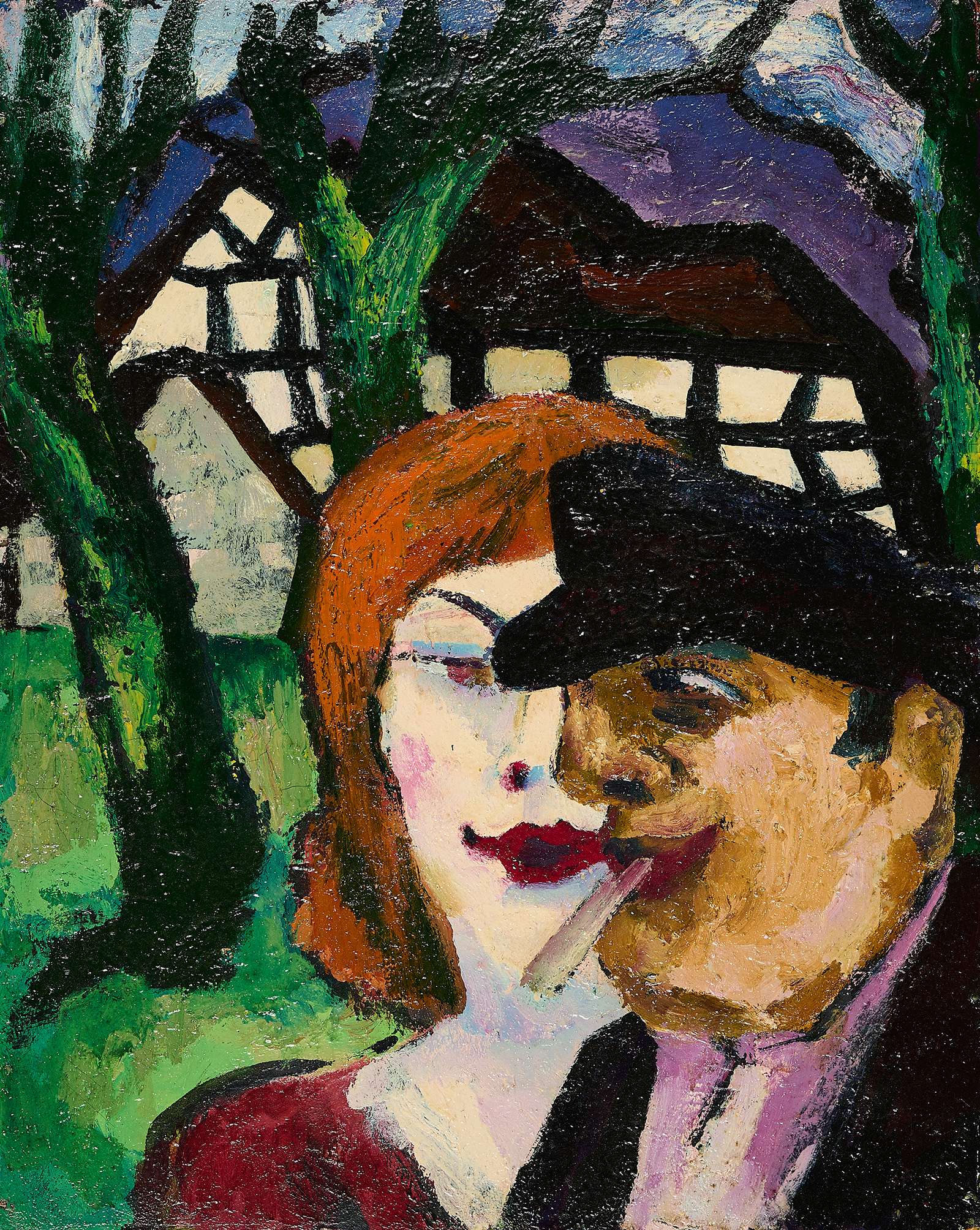
The exhibition explores the fractured biographies of two men: the Expressionist painter and graphic artist Fritz Schaefler (1888-1954) and the Rheinland Jewish industrialist and art collector Joseph Heymann (1887-1954).


Führung
:
Öffentliche Sonntagsführung in der Dauerausstellung
Eine Entdeckungsreise durch unsere Sammlung
Im Zentrum für verfolgte Künste können Sie Künstler:innen entdecken, die über die letzten Jahrzehnte in Vergessenheit geraten sind.
colloquy
:
How could that happen?
Cultural Policy Salon with Götz Aly
Götz Aly is one of the most famous authors on the history of National Socialism and the Holocaust. Cultural Policy Salon at the Center for Persecuted Arts with Andreas Schäfer.



.jpg)